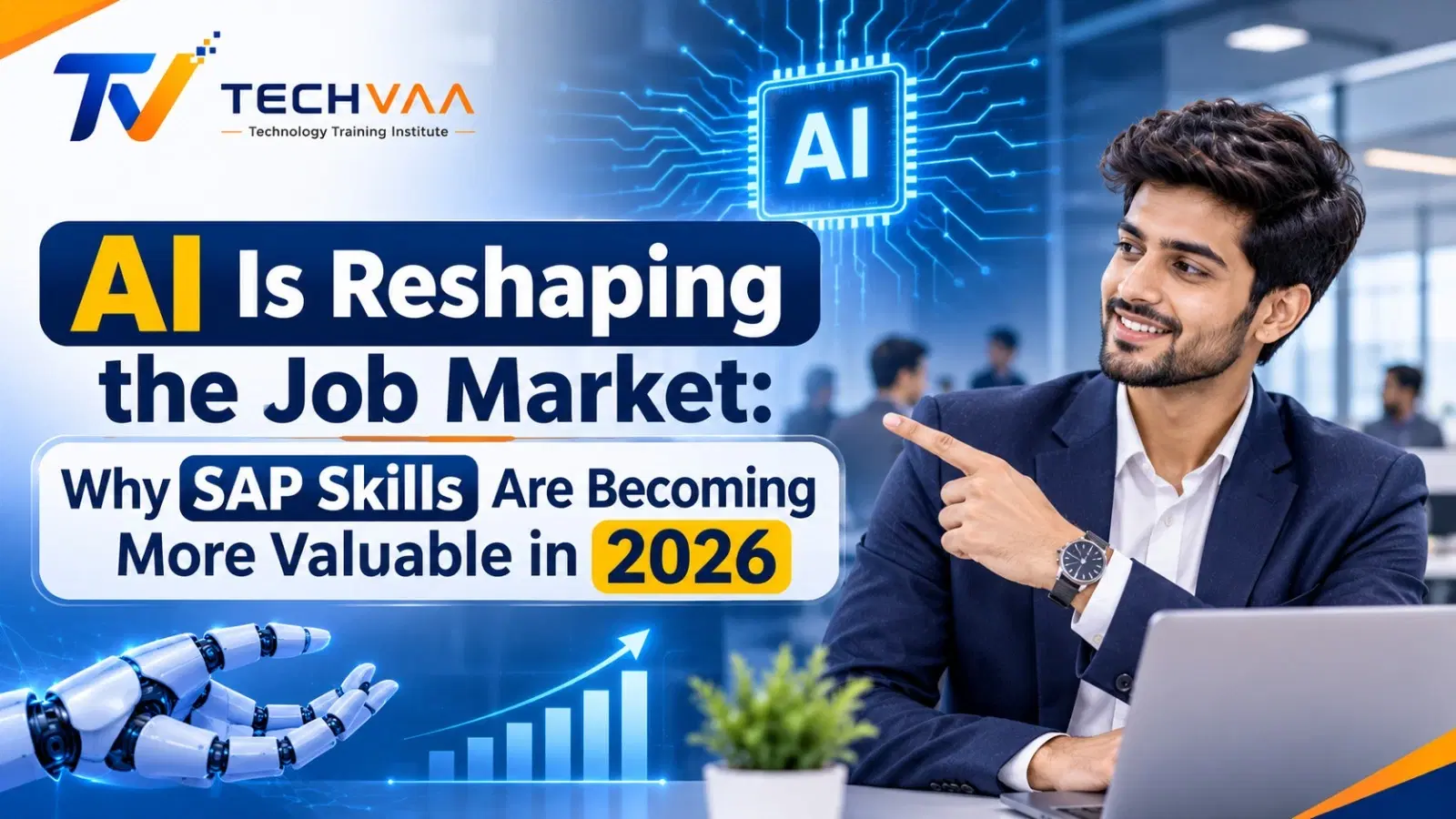
The way companies hire, manage teams and conduct business is changing faster than ever. Artificial Intelligence (AI) is no longer something organisations are simply experimenting with. It is becoming part of everyday business operations, influencing how employees work, how decisions are made and what skills employers look for in candidates.
According to IDC, by 2030, around 70% of new job roles in Europe are expected to be directly enabled by AI technology. This prediction highlights an important shift in the job market: future opportunities will increasingly involve working with technology rather than relying entirely on traditional methods.
But does this mean AI will replace professionals? Not necessarily. The bigger change is that companies are looking for people who can combine technical knowledge, business understanding and the ability to adapt to new technologies.
How AI Is Changing Career Opportunities
AI is helping businesses automate repetitive tasks, analyse large volumes of data, improve productivity and make faster decisions. From finance and HR to supply chain, sales and customer service, its applications are expanding across departments.
As routine work becomes increasingly automated, employers are placing greater importance on problem-solving, analytical thinking, technology awareness and practical experience.
This shift also changes the expectations from job seekers. Having a degree may be an important starting point, but knowing how businesses actually operate and understanding the tools they use can make a candidate more prepared for the workplace.
The opportunity is not just to learn AI. It is to understand how technology is used to solve real business problems.
Why SAP Skills Still Matter in an AI-Driven Workplace
AI can analyse information, generate insights and automate processes. However, businesses still need structured systems to manage their daily operations, including financial transactions, procurement, inventory, sales, production and reporting.
This is where SAP plays an important role.
SAP is an enterprise resource planning (ERP) system that connects different business functions within an organisation. Companies use SAP to manage their operations, maintain business data, streamline processes and make informed decisions.
As businesses modernise their operations and adopt AI, knowledge of enterprise systems becomes increasingly relevant. Professionals who understand both business processes and the technology supporting them can help organisations implement improvements, manage workflows and use data more effectively.
AI may make certain tasks faster, but understanding why a business process works a particular way is still essential.
Is SAP in Demand in India and Other Countries?
SAP skills are relevant not only in India but also in international business environments where organisations use ERP systems to manage their operations.
In its India Talent Insights Report 2025, Randstad reported increased demand for SAP professionals, particularly at middle and senior career levels, across Tier-1 and Tier-2 cities. This indicates that SAP expertise continues to be relevant as companies look for professionals who understand enterprise systems and business processes.
The demand is also visible outside India. A KPMG report covering business services leaders in Łódź, Poland, found that SAP/ERP skills were sought by 53% of surveyed organisations in their recruitment processes. The same survey highlighted the importance of automation, AI/ML and other digital skills.
These findings are important because SAP is not limited to a single industry or country. Businesses in manufacturing, retail, finance, logistics, consulting and global business services use ERP platforms to manage interconnected operations. Professionals with SAP knowledge can explore career opportunities across industries, depending on their module expertise, experience and business knowledge.
SAP India has also stated that there were more than 25,000 open roles in India requiring SAP expertise across consulting, development and technology functions in its February 2026 announcement. This is an industry signal worth paying attention to, although vacancies naturally change over time.
Which SAP Skills Should Professionals Learn?
For someone planning to enter the SAP ecosystem, choosing the right module is an important first step. The best module depends on your educational background, interests and career goals.
SAP FICO (Finance and Controlling) is a suitable option for commerce graduates, accountants, finance professionals and people interested in financial management, accounting operations and reporting.
SAP MM (Materials Management) is relevant for individuals interested in procurement, inventory management, material planning and supply chain operations.
SAP SD (Sales and Distribution) focuses on sales processes, customer orders, pricing, delivery and billing.
SAP PP (Production Planning) is useful for understanding manufacturing operations, production planning and shop-floor business processes.
Along with module knowledge, learning SAP S/4HANA, understanding end-to-end business processes, practising real-time scenarios and developing analytical skills can help learners build a stronger foundation.
Build Skills That Connect Technology With Business
AI will continue to change the workplace, and new job roles will emerge as businesses adopt technology. The professionals who prepare for this shift will be those who keep learning, develop practical skills and understand how technology supports real business operations.
At TechVAA, learners can explore SAP training designed around practical understanding, business scenarios and industry-oriented learning. Whether you are a fresher planning your first career move or a working professional looking to upgrade your skills, building SAP knowledge can be a step towards becoming more prepared for the evolving job market.
The future of work is not just about using AI. It is about understanding business, technology and how the two work together.
Start building your SAP skills with TechVAA and prepare yourself for the opportunities emerging in the digital business world.
Visit: https://www.techvaa.com/courses
Explore our SAP courses and book your free demo session today.